Iran, Hungary, Ukraine: The World Is Running on Legacy Software
The old rules are gone. The new ones aren’t written yet. And no one in charge knows how to write them.
The old world order is dead. The new one hasn’t been written yet. And the people currently in charge — on both sides of the Atlantic — are structurally incapable of writing it.
That’s not a provocative opinion. It’s an analytical conclusion, and few people are better positioned to make it than Bianka Banova. Bulgarian-born, Switzerland-based, she runs the Waronomics Substack with what she calls Balkan candor and systems thinking — no institutional affiliations, no ideology to protect, and two decades of pattern recognition developed by someone who grew up watching history happen to her country.
In this conversation, she tells you things you won’t hear anywhere else.
Péter Magyar — the man who just crushed Hungarian Prime Minister Viktor Orbán — holds immigration positions stricter than Orbán’s. Yet within hours of the results, right-wing commentators from outside Hungary, with millions of followers — who couldn’t have found Hungary on a map the day before — declared it a civilizational catastrophe. They were, wittingly or not, running the Kremlin’s script.
The war in Iran is quietly reshaping the war in Ukraine in ways almost nobody is discussing. It’s strangling two of Russia’s most critical military suppliers at once, and tying China’s hands in ways that are starting to show up on the battlefield in both Ukraine and Iran..
And European reluctance on Iran isn’t weakness — it’s the predictable consequence of an American administration that spent over a year treating its closest allies as adversaries. You don’t get the alliance when you need it if you’ve spent 14 months dismantling it.
Running through all his is Banova’s core argument: a leadership class with no skin in the game, no time horizon worth the name, and no ability to think past the next election cycle. She’s seen this failure up close her entire life. She knows exactly what it looks like.
She’s cautiously optimistic. But she’s clear: The next 10 to 20 years are going to be hard.
 Apple Podcasts
 Google Podcasts
 RSS
RSS
Full Text Transcript:
Jeff Schechtman: Welcome to the WhoWhatWhy podcast. I’m your host, Jeff Schechtman.
There are certain voices that arrive at exactly the right moment, voices shaped not by the comfortable distance of a think tank or a university chair, but by the lived experience of watching history happen to your country, your region, your people. My guest, Bianka Banova, is one of those voices. She is Bulgarian-born, Switzerland-based, and runs a Substack called Waronomics, described accurately as Balkan candor meeting systems thinking. She has spent two decades studying history, macroeconomics, defense, energy, trade, philosophy, and ideology across multiple languages and multiple worldviews. She has no institutional affiliation to protect and no ideology to serve, a combination that turns out to be extraordinarily rare, and in this particular moment, extraordinarily useful.
She grew up in the part of Europe that has always paid the bill for great power miscalculation. She watched the slow, painful, incomplete dismantling of Soviet-era governance. She knows from the inside what captured institutions look like, what extractive politics smell like, and what it costs a people to finally decide they’ve had enough. In the last several days, Hungary gave us a master class in exactly that. In the last several months, the war in Iran has given us a master class in something else, in what happens when the strategic thinking that Bianka writes about is replaced by tactical improvisation at civilizational scale. And for years now, she’s been documenting the larger failure: a transatlantic leadership class trained for a world that no longer exists, operating on a twentieth-century manual in a twenty-first-century crisis. She is someone who tells us exactly what’s happening while everyone else is still debating what to call it.
It is my pleasure to welcome Bianka Banova here to the WhoWhatWhy podcast. Bianka, thanks so much for joining us.
Bianka Banova: Thank you for having me. It’s a pleasure to be here.
Jeff: Well, it is a delight to have you here. First of all, before we get into so many of these issues, talk a little bit about how you got into this business, how did the Waronomics Substack get started, and a little bit about yourself?
Bianka: Well, the way that I — to be honest, I was kind of bullied into it, because I have always been a very avid social media user. But the only way that I personally use social media is basically just to share my commentary on news or my analysis. I’ve always done it for free, just for friends, and then people started following me. And I have a lot of friends and acquaintances that started pushing and saying, why don’t you just document it, make it into a Substack or into a blog or something like that?
And I kind of saw a gap between the way that the world actually works versus the way that a lot of analysts explained it. And I thought, well, I have a little bit more different perspective. I’m not an academic. I’m not affiliated with any institution, but I do have a lot of lived experience. And I come from the private sector. I come from the software development industry, so I also have that in my back pocket. And I thought, well, I do have quite a lot of knowledge, because I started going into history and geopolitics when I was very young, like a young teenager, because I come from a kind of a family that was very political. It never went into politics, but it was very politically involved. Politics was always discussed on the dinner table at our house. We would always watch the news. Both sides of my family tree have been prosecuted in some shape or form by the former communist regime. So usually kids that come from that kind of background, they’re very politically — not like politically involved — but we were focusing and reading a lot about it.
And then I started traveling when I was pretty young. I was going to Western Europe. I visited the States multiple times. And when you’re a kid and you’re trying to understand why your country is the way it is versus other countries, and then you start reading history — but the more you read history, the more you understand, you realize that you have to study things like economics and trade and philosophy and religion in order to be able to get the full picture of why everything is happening the way it’s happening.
And once you do that for twenty years as a passion hobby, something that you genuinely enjoy, after twenty years you accumulate knowledge, and you recognize certain patterns, and you’re able to speak with some level of expertise on these topics. So that’s how Waronomics actually started. I just want to share with the rest of the world my perspective and how I’m analyzing and viewing the world.
Jeff: I want to come back to something you said before about the mistakes that you hear commentators and pundits make, and not single mistakes, but mistakes in their understanding, in their worldview. Talk a little about that.
Bianka: Well, I think that there is this general understanding of how the world works. We have the rules-based order, and that rules-based order is really great. It has worked for almost eighty years now following the Second World War. And I feel like a lot of people just automatically assume that these — or they have internalized certain ideas, that because it has worked so well for so long, it’s just going to run perpetually.
And there are a lot of ideas that have been internalized by Western analysts. For example, American hegemony is kind of like a permanent feature of international life. We’re all used to the idea that the American military and the American Navy is going to be protecting the trade routes, the supply chains, and the rest of us are just going to produce and trade freely. Then we have the idea of NATO as this robust defense alliance, that it is the unquestionable backbone of European security, which we now see it is not the case. A lot of ideas about how economic interdependence is going to be a force for peace, how Inevitable the liberal democratic convergence is going to be in the long run, and how basically every single country around the world is a liberal democracy waiting to happen. And we have elevated also free trade as the new God. It’s not like these ideas didn’t work, but they worked for a specific period of time, and then they started deteriorating, and people kind of missed how they started deteriorating.
Now first we have the US. The US overextended itself. I don’t think that there is a question about that right now. Being the global guarantor of trade routes and supply chains turned out to be a lot more costly and a lot harder to sustain in the long run than expected. This is not the first time in history. We have many examples of empires that have gone through that. At some point, it’s just too overwhelming, even if you have the wide web of alliances that the United States has.
And then we have NATO. And ironically, with NATO, is that it was actually originally created in ’49 to defend against Soviet expansion, meaning Russian expansion. I know a lot of people come at me when I say that. They’re like, But Bianka, the Soviet Union is not the same thing as Russia. Not really. Basically all the orders were coming down from Moscow. It was a very centralized union when it comes to the important decision-making. And ironically, the only country right now that is actually fulfilling the original purpose of NATO is Ukraine, which is not even a member state.
And then we have the idea of exporting liberal democracy. All of the analysts and all the journalists and academics were thinking about liberal democracy is so nice — why wouldn’t places like Afghanistan or Iraq adopt it outright? And they failed to understand that these are very different cultures. And there is a vast difference between the East and the West when it comes to the operational software. And we saw in places like Iraq and Afghanistan that that assumption didn’t really pan out. You couldn’t really fast-forward such a political development, going from deeply traditional tribal societies to essentially modern liberal democracies overnight.
And then there is free trade. And that’s the one that really — it’s a big pet peeve for me. We had this assumption that — and this actually comes a lot from the German school of thought — they were like, well, if we trade, we’re not going to go to war. It sounds great in theory, and it did work for Europe. But Europe is part of Western civilization. It has a civilizational whole. And it’s really impressive how it worked, because if you look just one hundred years ago, European states used to kill each other by the millions, and now that’s not the case. Now we have the European Union, and if we have disputes, we take it to our respective institutions and we figure it out.
But that doesn’t mean it’s going to work the same way with Russia and China, because Russia and China operate on a completely different ideological software. And that is the other thing that I believe the Western analysts completely overlooked, whether it’s about the Middle East, whether it’s about Russia, whether it’s about China, the power of ideology. I don’t honestly — and I’m not saying this is like a bad thing. I’m not trying to insult anyone — I don’t think that the Western mind is wired to understand just how powerful ideology is, because the Western mind is very logical and pragmatic. Like, you have these former empires like the British Empire or the Portuguese or the French, they collapse, or the Dutch, they collapse, and then they go through a period of — it’s unpleasant, it’s humiliating — but they lick their wounds, and then they get up on their feet and they move on. That is not how it works in the East. And the East has — whether it’s China and Russia — they have very different ways of operating. And ideology is very central there, and it’s driving. And the problem with ideology is that it’s not rational. And I think this is why the Western world struggles to understand these regions, because they don’t understand why these countries choose to go to war, like in the case of Russia, when they can just trade with us and they can become wealthy and they can have a strong middle class and they can enjoy visa-free travel and all the things that we take for granted because we’ve already been through that. They don’t understand the ideological software that is running their countries, and ideology by default — it’s not rational and it’s not pragmatic. China sees itself as [the] ‘Middle Kingdom’. They view themselves as not just a civilizational force. They view themselves as the de facto civilization, and everybody else is just everybody else.
And then you have Russia, which also has a lot of imperial ambitions, especially in the Slavic world. And they’re not going to step down and just accept that they’re no longer an empire, that they’re no longer a major great power. And they’re going to try to restore that. And this is why so many people were shocked with the war in Ukraine. I remember back in 2020, I was saying to some of my friends, look, the next two wars that are going to happen are going to be in Ukraine, and they’re going to be in the Middle East, like Israel and surrounding nations like Lebanon or Syria, with Iran as well. But when I say the Middle East, basically I mean the whole region is going to go up in flames. And everybody else thought I was crazy at the time. They were like, come on, this is not going to happen. I’m like, just so you wait, it is going to happen. And then when it actually happened, people were like, but how could you tell? And I’m like, look, I’m not a fortune teller. But when you study history and when you study the culture of the different players on the board, at some point you develop pattern recognition and you can anticipate their next move. And that’s exactly how the war happened in Russia. And I think that the Western analysts are really missing that piece of the puzzle. They’re looking through the lens of logic and pragmatism, and they’re completely disregarding the power of ideology that has a grip on the Eastern World.
Jeff: To what extent is that tied to this idea of lack of strategic thinking? You’ve written eloquently on the subject of how leaders today, particularly in the West, really have lost the ability to think strategically. Talk about that.
Bianka: Well, I’m personally — I’m not seeing grand strategy from both sides of the Atlantic when it comes to leadership. I think they have — and this is why I call them the comfortable class — because they have internalized those ideas that, yeah, sure, it’s going to get rocky occasionally, but the rules-based order is going to be the rules-based order, and we don’t need to tend it, we don’t need to maintain it.
And they have lost… and one of the reasons I think they have lost that ability, one is the fact that they grew up and formed their political ideas during a time when the world was much more peaceful, much more stable. It made a lot more sense. And the other part — and I just want to be very clear, this is not a boomer versus everybody else — I also think that it’s because of age, because when you see the age of some of the leaders, both in Europe and in the United States, those are people in their sixties, in their seventies. They don’t have such a long time horizon.
This whole framework actually comes from — it’s borrowed from the military. It’s a military framework, the difference between the tactical, the operational, and the strategic level of thinking. So the tactical, this is the immediate move. How you respond as a leader or as a politician to the events that happened today. What are you going to tweet? What kind of press conference are you going to hold? Then there’s the operational one, and this is where the leadership is stuck, because the operational level of thinking is where you design policies that will win you the next election and that will keep you in the running for the next election cycle. And that’s it. They cannot think past a certain election cycle.
Some people say this is the flaw of democracy. Yes, this argument can be made, but it’s also a fault of a particular generation that it doesn’t have these time horizons in front of itself. Because when you reach the strategic level of thinking, this is the long term. This is the why. This is the kind of world we’re building today that is going to take effect in 2040, in 2050, in 2060. I don’t think that a lot of our leaders today are going to be alive in 2050. We know that Vladimir Putin and Xi Jinping are kind of hoping they will live up until one hundred and fifty — but biotechnology is not there yet.
And I think they’re stuck at the operational level because they don’t have skin in the game. And it is very difficult to be a leader in a democratic country because you have to appease your electorate. Otherwise, you lose power. And it’s very difficult to make tough decisions, especially in this climate. And when you don’t have skin in the game, why would you do it? But when you put somebody that is younger, in their forties or their fifties, they’re more likely to take the heat, because they’re like, okay, this is going to be my life and the future of my children, so I should be able to take some of these tough decisions. And we can actually see that happening in Hungary right now with Péter Magyar. He’s, I think, like 44 or something, 44 or 45. He’s making some really tough decisions. He’s cleaning house in a way that I don’t think that another politician is going to be able to do, because it is quite radical. And yeah, this is why I call them the comfortable class. They’re also very risk-averse. That’s the other thing, and that also comes with age.
And I’m seeing it with my own mother, for example. She’s 68. She used to be, just like 10, 15 years ago, she used to be much more confident when it comes to driving. She used to take more risks. Now she’s much more tame. She’s a little bit scared when it comes to driving in traffic, so on and so forth. So when you don’t have skin in the game, there’s no reason for you to take risks.
And this is not just political leadership. There’s also business leadership. One of the best recent examples of that was the CEO of Rheinmetall. He came out and said — and it was a pretty unpleasant thing he said about the Ukrainian drone program — he said, oh, well, this is just Ukrainian housewives building drones in their kitchens. And I’m like, okay, I get it. You’re the CEO of the biggest German arms manufacturer. You’re building these really very big, complex, and very expensive systems. But that is not the reality of war of the twenty-first century, the war that is actually happening in Europe right now. And again, he’s in his, I think, late sixties. And the CEO of Taft Industries, who’s, I think, like 36, from Ukraine, he actually reached out to him and he was like, look, I understand where you’re coming from, but how about we have a conversation about defense that doesn’t sound like it’s 1979, but it’s 2026, because it is very different.
So it’s not just our political leadership, it’s also our industry and businesses that are kind of stuck on this operational level. They’re risk-averse, especially in Europe. I know in the States it’s a little bit different, because you do have this culture of entrepreneurship there and of taking risk, but in Europe it’s still much very stuck. And younger people are actually experiencing a lot of difficulties getting through the door, whether it comes to entering politics or whether it comes to leading industries and businesses and so on and so forth, because there’s already a lot of incumbents waiting in line. And unfortunately, we live in a world where we need more adaptability, and we need people that are more agile and they can adapt on the go. And that is not happening right now, unfortunately.
Jeff: Talk about the way that generational difference and that view of strategic versus operational thinking, how that played out in the internal context of what we just saw happening in Hungary.
Bianka: Well, with Hungary, it’s very interesting because they reached a point… So Orbán has been in power there for sixteen years. That is a very long time. He has spent a lot of years reshaping the way that the political system works. He took over the courts, the judiciary, the media. He really had entrenched himself in power. And for him to be removed, it needed a very radical movement, which is exactly what happened.
And all the opposition parties… So Péter Magyar — and this is something that I noticed some American commentators initially didn’t get — he’s not a left wing. He’s a conservative guy. He used to be a member of Orbán’s party, but he split in 2024 over a scandal of the president of Hungary at the time. He gave a pardon to somebody that was involved with covering up child abuse in a Hungarian orphanage. So for Péter Magyar, that was it, and he left the party. He went public. He started talking about the levels of corruption that he had witnessed. I think he was actually married to the attorney general of Orbán at the time. He split, and he’s still very much a conservative guy. He shares a lot of the ideas when it comes to immigration, when it comes to fiscal policies, so on and so forth. But for him to win and to be able to reshape Hungary and to bring back the democratic process that was disrupted by the Orbán government and by his cronies, because that’s what they were, actually the rest of the opposition parties — liberal, center-left, so on and so forth — they refused to take part in the election, and they all backed Péter Magyar, who’s technically center left. He’s a conservative guy.
I personally know Hungarians my age, people in their thirties, they have been hardcore liberals their entire lives, and they said, I’m going and voting for the conservative guy because he’s the only person that can break this vicious cycle. And he’s the only person that, after four years of being a prime minister in Hungary, if he wins, we’re actually going to be able to have other — we’re going to be able to vote for the parties that we want to vote for, with the full knowledge that they actually have a chance of getting into power and implementing certain policies that they want to.
And that was a very agile, adaptable way of thinking of younger people, which are like, okay, we’re going to do this now instead of keeping — because, for example, just to give you an example, in the United States, I have a lot of friends that are Americans. Some of them are Democrats, some of them are Republicans. Especially within the older generation, people in their fifties, sixties, and seventies, they will come to me and say, I am a lifelong Democrat. I’ve never voted anything other than Democratic candidates, or vice versa, I am a lifelong Republican, and that’s who I’ve always voted for, and I’ll continue to vote for.
But then you see younger people, and they’re much more adaptable. They’re like, okay, I can go either way, depending on what is actually important for me right now. I’m not going to be so, it’s not like tribal, but so faithful to the party. The same way that now you don’t see young people spending forty years at the same company. They will move. They will spend two, three years here — three, four years there — and then accumulate a much more diverse CV. But this is exactly the type of adaptable, agile thinking that was able to remove Orbán from power in Hungary. And that was just a lot of people, because if younger people in Hungary were still stuck in that idea — oh, I want my guy who is center-left or left wing or liberal to win, and I’m just going to vote for him, to hell with everything else — Orbán would have still been in power. But that’s not what happened. Everybody decided to make that tactical move to get somebody that actually had a chance of winning. And he’s going to make a lot of reforms and restore the constitutional democracy of Hungary so it can continue and start operating as a proper European democratic country.
Jeff: Is Hungary a kind of proof of concept that other countries could look towards, or was it pretty sui generis in terms of the way things evolved there?
Bianka: Well, yes and no. I think that — on the one hand side, people have to learn to be a little bit more adaptable when it comes to their political reality. I understand that everybody has their own political ideology that they would like to follow. Some people would like to follow it to the grave. But I think the lesson learned here is that you have to understand what is important for you, what is important for your nation and for your own future. And you don’t have to agree with the candidate that you’re currently voting for. You don’t have to agree with him on everything, but you have to agree with him on the most important things.
And in Hungary’s case, the most important things were: let’s restore the democratic order and salvage the democratic institutions of the Hungarian Republic. I think there are lessons to be learned with other countries that are struggling with that. And people have to understand that maybe the whole left-right, Democrat-Republican divide is not actually doing them any favors. And if one candidate is particularly appalling and is doing so much damage to the country the way that Orbán did, maybe it’s time for people to bridge their political divide and to unite against another figure that’s going to be able to take them out of that mess. Otherwise, they’ll just continue digging their grave.
Jeff: And to relate this to the US, you’ve written about the reaction there, or what you see as the long-term reaction of the US vice president going there, supporting Orbán.
Bianka: Oh yeah. So you have to understand that Eastern Europe — and I’m part of that generation as well, Eastern Europeans for decades, and I mean all the former Warsaw Pact countries, especially the ones that have been really traumatized under communism — we have always been very pro-American. I learned English through American movies and Cartoon Network, just to give you an example. And for us, America was this idea that, yes, it is possible to be rewarded based on your merit. It is possible to have a functioning democracy, to have a free nation where you have freedom of speech and freedom of movement.
It was an ideal that we held for at least two generations, because my parents were the same. This is how I was raised. And then when JD Vance came — I remember originally I was making jokes because JD Vance goes somewhere and he had the opposite effect of what he’s trying to do. But at the same time, behind all the jokes that I made about this, I’m like, look, this is actually serious, because this is how we have seen the United States for so long, for decades. And that is true. It’s not like we’re making it up. For a very long time, the United States has been a very good example, especially for us in Eastern Europe. But for the vice president of the United States of America to come to Budapest and to promote a candidate — you have to understand that Orbán is a member of this very particular class, a political class in Eastern Europe that is like post-Communist. He’s not communist himself, but he’s part of that class, like a parasitic kind of class that latches on to power, that is very populist, and they will do whatever it takes to just remain in power.
So when the Wall fell in 1989, and the Soviet Union collapsed and the communist regime collapsed, we didn’t immediately snap into free markets and democracy. First of all, we had a transition of ten years that were absolutely horrendous. I’m talking hyperinflation, crime. There are still people, including myself — especially my parents — that are still very traumatized by what they experienced. Because you come to a point where you get your salary and you just go and buy whatever, because after two hours, that salary is not going to have any purchasing power. So there is a class that emerged in all of that chaos, because they knew the system well. They were either part of the system or they were close enough to that system. We’re still fighting in Eastern Europe to get rid of those types of elements. And it’s probably going to take maybe one more generation to completely remove them, to completely obliterate them. And that is the price we’re willing to pay. I have been part of mass protests in the past in Bulgaria, where I helped topple three different governments. And that is the conversation you have with young people. And I’m talking young people — we were in our twenties when we first had mass protests where we forced the government to resign. We’re like, we’re not doing this for ourselves, we’re doing this for our children. So there is this very good understanding that, yes, our generation is not going to bear the fruits of democracy or free market, but at least our children will, as long as we actually remove those people.
And for the vice president of the United States of America to come and support the very archetype of people that we’re trying to remove, that we’re struggling to remove — I mean, it’s just that you get stabbed in the back. And it changed a lot. Nobody was expecting that. I understand this is political games and all that, but it had a way that I don’t think that a lot of people in the West actually understand. This is not just rhetoric. This is not just, oh, you know, our friend Orbán here. No, it doesn’t work like that.
Jeff: What are the long-term consequences of that, do you think, in terms of the perception of America there.
Bianka: I think the long-term consequences of that is that for a very long time it was assumed that we have this fantastic alliance like the NATO alliance. And you know what, for example, when 9/11 happened, pretty much every NATO country sent troops. I mean, some of the countries sent just a few hundred people, but some of those countries have populations of one million.
But I think that we’re reaching a point where, it’s not that we want to break up with the United States in terms of being allies, but it’s more like the United States is not as reliable as we thought they were. And that is not — especially with Eastern Europeans, we know what it’s like to have bad leadership. But the expectation was, regardless of what kind of leader comes into the United States, if he’s too chaotic or if he’s doing things that he’s not supposed to do or saying things he’s not supposed to do, there are certain checks and balances, there are certain institutions that are going to contain him. And we didn’t see that happening.
And based on that, the perception now is, okay, we cannot rely on this alliance the way that we thought we could. So there are just political changes happening. And you can see it with the war in Iran. And there has been a lot of criticism from the current administration saying that the Europeans are not helping unblock the Strait of Hormuz. And I have tried to explain that multiple times, that the decision to go to war and to engage the armed forces of any European country — that is a political decision. It doesn’t come from the military. It has to be decided on the political table.
And there isn’t a single politician in Europe that’s going to do that after fourteen months of such poor diplomacy coming from the current White House. Because the European politician that does that might as well resign now, because this is not going to be met with a lot of enthusiasm from the public. Exactly because nobody really expected that level of hostility. Everybody kind of expected it to be a little bit crazy, because we’ve already had Trump before, and he talks a lot, he doesn’t really have a filter. But this is reaching a different level.
For example, and this isn’t the first time they actually tried to influence elections in Europe, they tried the same with the alternative for Germany in Germany. I remember last year when — it was Vance, yeah yeah — he went to Germany, he refused to meet with the official German government, he went and met with them. And then Elon Musk, who was also part of the administration at the time, he hosted a live stream on Twitter. And it just didn’t really go well with the European public. And it didn’t bode well because the expectation was that at some point this was going to be contained, and it was not.
Jeff: Should we look at the current actions of European leaders in not getting involved in Iran and not getting involved in this war? Is that a positive mark on European leadership at this point?
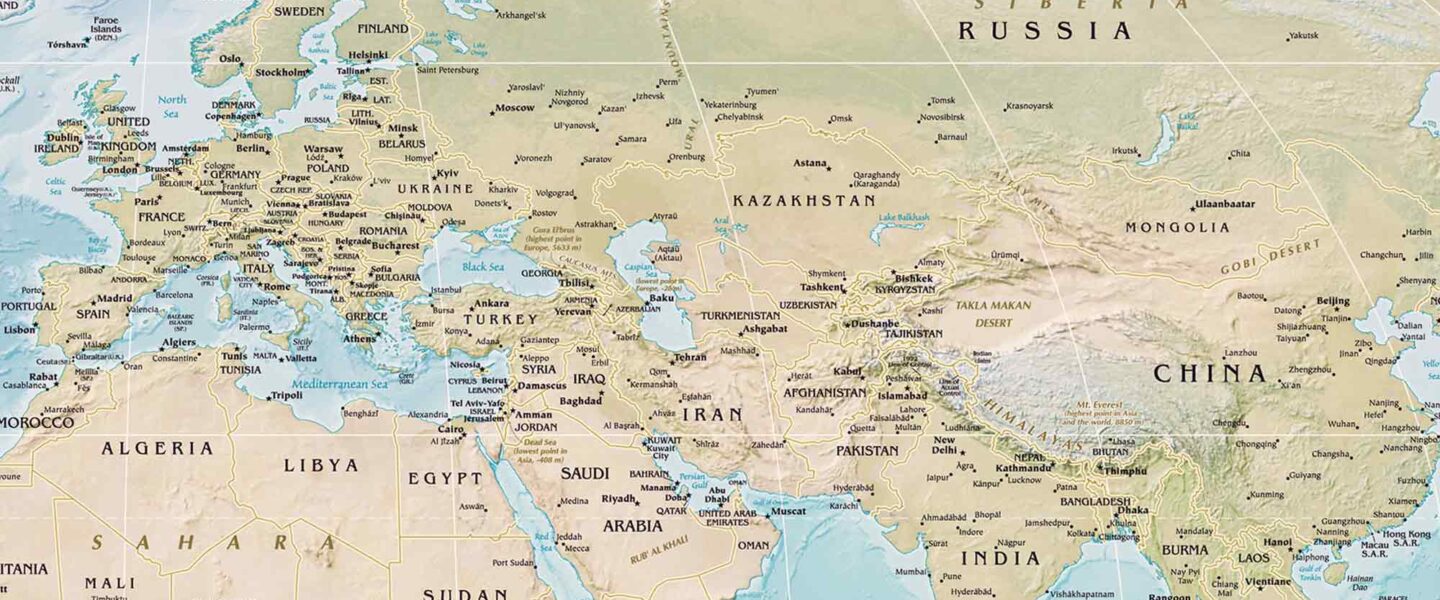
Bianka: Well, I can’t say it’s neither positive or negative, because I kind of don’t like the fact that European leadership and European states are disregarding the importance of the Middle East. In Bulgaria, for example, we don’t call it the Middle East. We call it the Near East because it’s much closer to us geographically. This is our backyard. Whatever happens in the Middle East, we’re going to take the brunt of it. We’re going to be handling any refugee crises that are going to happen. Any destabilization of the region is going to affect us.
So I do think that Europeans should be, and should have been for the last twenty or thirty years, much more involved in that region. But at the same time, I feel like the last year European leaders thought that they could do the same thing that they did during the first Trump administration, which is, okay, let’s work with the American State in terms of the Pentagon, in terms of the State Department, in terms of the actual professionals, professional diplomats and professional military personnel that’s there, and kind of don’t really pay that much attention to what Donald Trump says because he’s very flamboyant and unpredictable. But this time around it’s a little bit trickier, because he has a new team around him, which makes that much harder. I think that last year European leaders tried to follow the same strategy from his first term, and that backfired. It didn’t work. They tried to flatter him. They tried to be nice, that they agreed to every single tariff demand and so on and so forth. In the eyes of the European public, it made them look very weak. A lot of people were very, very angry at the way that they were acting. And I think that at some point later in 2025, they realised that despite all of the appeasement — for lack of a better word — this is not working anyway, so they might as well take a little bit stronger stance when it comes to how they’re handling the current US administration. And I think that they’re not actually taking part in the military operation in Hormuz is one of those things, because they know it’s not going to be popular at all.
But I also don’t think that they’re completely oblivious. I mean, the logistics of that operation is being handled in Europe, in European bases, like here in Bulgaria. We have a lot of American aircraft in Greece and in Romania and other places around Europe. So they’re not exactly completely neutral about this. But I don’t think that they’re going to take outright military action, or maybe some of them will just form a coalition of the willing, mostly because it’s not at all a popular thing to do. And second, we actually do have a war on our continent as we speak, and it’s just resources that I don’t think the Europeans actually have to dedicate to the Middle East right now.
Jeff: I want to talk a little bit about the war on the continent right now. Ukraine has kind of gotten lost in all the focus on the Middle East and Hungary. To what extent do you think that the current events in Iran and what’s happened in Hungary, the way this is all playing out among the Europeans as you’ve been discussing, what impact does any of this going to have, if any, on the war in Ukraine?
Bianka: I think it’s going to have a predominantly positive effect. First of all, with the change of leadership in Hungary, there’s not going to be — because the foreign policy platform of the current prime minister of Hungary, he said, we’re not going to be outright helping Ukraine because we’re currently in a very dire economic situation, but we’re not going to be blocking them either. And as many listeners probably know, one of the problems that we have in the European Union is this whole thing with unanimous voting. So when it comes to certain things, for other things we only have to have qualified majority. But when it comes to defense, when it comes to foreign policy, all twenty seven members have to agree. And so far, Hungary has played a lot of veto power when it comes to aid packages. Now this is not going to be the case, so this is positive for Ukraine.
When it comes to Iran, this is one of the reasons why they were the first ones to actually go to the Gulf states and provide military support with interceptors, because they do have a lot of experience shooting down drones. It is a net positive in two ways. First, this is another ally of Russia that is currently going down. Iran has supplied Russia with drone technology, with parts, with a lot of expertise. I have personally been to Iran, and I can guarantee you a lot of people in that country are very smart and very competent, especially when it comes to engineering, including hacking and stuff like that. They have incredible cybersecurity capabilities.
And then you have the China element, which is China has been kind of footing the bill for the war in Ukraine on Russia’s side. That war would have never happened without the explicit okay of Xi Jinping. But they have also invested heavily in Iran with hundreds of billions of dollars in terms of oil infrastructure that they needed, because a lot of their oil and gas comes from there. And with that war happening, on the one hand side, it’s tough for Russia because they’re losing one of their suppliers when it comes to offensive weapons and technology. And on the other hand side, they’re kind of tying the hands of China, because their supply chains have also been disrupted. Their inflow of oil has also been disrupted. I know that they have reserves and all that, but it’s still impacting them. And the investments that they did in Iran are essentially getting blown up. So are they going to be able to provide the same level of support when it comes to Russia and Russia’s war in Ukraine? I don’t know. I don’t think so. But when you see how the Ukrainians reacted, it was a very positive reaction. They immediately jumped and tried to help, because they know what’s at stake. And that war in Iran, a weak Iran is good for Ukraine on these two fronts, both on the China and on the Russian front.
Jeff: And finally, talk a little bit about your ongoing view of all this. Is it optimistic or pessimistic at this point? What do you see as both the best case and the worst case scenarios from all that is playing out as we speak?
Bianka: Well, I’m going to quote General Kyrylo Budanov, who used to be the leader of the military intelligence in Ukraine, and right now he’s like the general secretary of President Zelenskyy. And he said it very well. He said, look, the old world order is dead, and we’re building the new one right now. Whether I’m optimistic or pessimistic, I don’t know. I’m trying to be cautiously optimistic because I have faith in Western civilization and in the ideas and in the institutions that we’ve built.
I think that we’re going through a period where these ideals and ideas and institutions are being tested. Is it going to be nice, or the next ten, fifteen, to twenty years is going to be nice? I don’t think so. They’re going to be pretty tough when it comes to the economy, when it comes to global security. But I do think we’re going to get on the other end of this with a new world order that is going to be hopefully adapted to the realities. There is not going to be so wishful thinking moving forward. I think that a lot of people, especially younger people, learned their lesson that benevolence is not really a thing, that there are nations that have adversarial — that are going against the Western rules-based order. And they’re going to try to protect what we have, and they’re going to try to refine it.
So I think that if there’s one thing that I can leave the listeners with, just prepare for some not very pleasant times. We have been through worse. I think that the next ten to twenty years — this is how long it usually takes for a new order to emerge — they’re going to be tough. But we have to persevere if we want to have that level of freedom and that level of prosperity moving forward — well, not ‘moving forward,’ after we’re done with restarting, with building the new world and the next new world order, because obviously the last one didn’t work out.
And I’m just going to leave with this quote, and I think I have quoted it in some of my articles, with the current Prime Minister of Singapore. He said, “Look, we’re in a very uncomfortable situation where the old rules no longer apply and the new rules haven’t been written yet, and we’re in the process of writing the new rules.” So I’m cautiously optimistic, because I think that Western civilization has survived worse, and I think that a lot of the ideas and the institutions that we’ve built are actually incredible. And I believe that there are just enough people across generations that are willing to protect those ideas and those institutions. And if they persevere, we persevere.
Jeff: Bianka Banova, her Substack is Waronomics. Bianka, I thank you so much for spending time with us today.
Bianka: Thank you very much for having me.
Jeff: Thank you. And thank you for listening and joining us here on the WhoWhatWhy podcast. I hope you join us next week for another WhoWhatWhy podcast. I’m Jeff Schechtman. If you like this podcast, please feel free to share and help others find it by rating and reviewing it on iTunes. You can also support this podcast and all the work we do by going to WhoWhatWhy.org/donate.