An exit from Iran may depend on resolving what to do with Hezbollah. Iran’s surrogate in Lebanon is wounded, but still remains a problem.
|
Listen To This Story
 |
Lebanon remains a critical factor that could eventually short-circuit the White House’s efforts to extract itself from President Donald Trump’s war with Iran. Trump’s attempt to engineer direct talks between Israel and Lebanon is a risky gamble that has the potential to backfire and provide a pretext to the Iran-backed Hezbollah to catapult itself once again into a powerful resistance movement, destabilize the Lebanese government, and possibly increase terrorism in the Middle East.
While both Lebanon and the United States have publicly stated that efforts to start face-to-face talks between Beirut and Tel Aviv are not directly linked to US talks with Iran, half a dozen interviews with political analysts and former Lebanese officials indicate that the opposite is true.
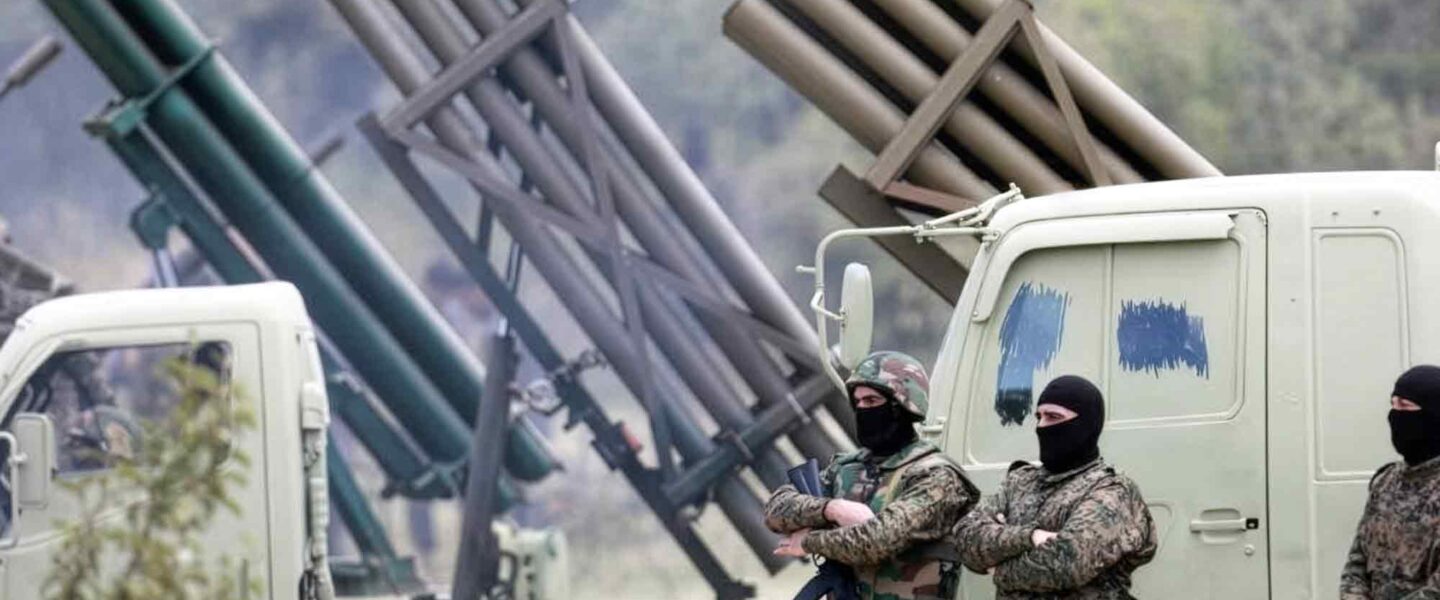
Hezbollah is at its weakest point since it was founded by Iran in 1982. That is largely due to dwindling support from Tehran and to Israel’s success at killing the movement’s top leaders. For its part, the Lebanese government, under former army general and now-President Joseph Aoun, has restricted the movement of Hezbollah’s military equipment across the country.
Lebanese analysts point to a major policy deficiency in the Trump administration’s handling of the talks, which, in addition to having repercussions in Lebanon, are also likely to cloud Washington’s relations with key allies, especially Saudi Arabia and Turkey.
A former Lebanese politician, who asked not to be named, cautioned that if the Trump administration handles the situation with Lebanon intelligently “it can minimize tension with Iran and help the president get the deal he wants. If he doesn’t do it right, then it will not only hurt the talks with Iran but also mess up Lebanon again.”
The major concern from Lebanon’s point of view is that Trump’s overblown rhetoric might misrepresent a modest Israeli-Lebanese ceasefire initiative as more than it really is, and try to present it as a full-blown peace agreement.
“Pushing too far for a full peace agreement is going to be a hard sell in Lebanon,” said Dr. Basem Shabb, a US-trained heart surgeon who served 13 years in the Lebanese parliament until 2018. “Aiming for a full peace agreement as in the Abraham Accords may be a bridge too far.”
During his first term in office, Trump, with notable help from his son-in-law Jared Kushner, who has extensive investments in the Middle East, brought Israel, the United Arab Emirates, Bahrain, Morocco, and Sudan together to normalize relations. The result was the Abraham Accords.
“The other thing to note is that some of the local powers that have prevented full peace between Israel and Syria — Saudi Arabia and Turkey — are also not very enthusiastic about full peace between Israel and Lebanon, but they are in support of a ceasefire in Lebanon,” he added.
If Trump tries to sell the ceasefire as anything more than it is, it will likely aggravate relations with Riyadh and Ankara, both of which are less than happy with Trump’s war on Iran.
For now, Trump seems content with accepting credit for talks between Beirut and Jerusalem. On Friday, he posted on his social media platform Truth Social that Israel “will not be bombing Lebanon any longer.” He added: “They are PROHIBITED from doing so by the U.S.A. Enough is enough!!!”
While he might have forced Israel to stop its massive and often indiscriminate attacks in Lebanon, the opinion in Lebanon is that the Vatican, Egypt, and Lebanese-American personalities, such as Trump’s son-in-law Michael Boulos, husband of Tiffany Trump, and US Ambassador to Lebanon Michel Issa, should also get credit.
More notably, the Lebanese government under President Aoun had already taken a number of steps in the past year to minimize the influence of Hezbollah and Iran’s activities in Lebanon. The government prohibited all military activities by Hezbollah — Hezbollah members were arrested for possession and transport of weapons — and issued a decree banning activities of Iran’s Revolutionary Guards, allowing for their arrest and confiscation of their guns if found.
The second area of concern is that Trump has been less than consistent in making a case for a ceasefire.
“They started these negotiations without any preparations,” said the former ranking Lebanese official. “Unlike the Baker-Madrid process, where every party was given a letter of guarantee spelling out the basis of negotiations and commitment to what is important for them, like territorial integrity and sovereignty, there was no agreement on the basis for a cease-fire.”
“Now, there are no experts on Lebanon at the State Department or White House, no experience for those participating in the negotiations so far from the Lebanese side, and no idea how this process will unfold in a way to keep Lebanon united and avoid a civil war,” he added.
“Israel has occupied more territory recently,” said Walid Choucair, a political analyst based in Beirut. “There are thousands and thousands of refugees inside the country. Lebanon wants its territory back. If the ceasefire doesn’t lead to that, that will be a pretext for Hezbollah to turn itself back into a resistance movement.”
In other words, short of a meaningful and acceptable ceasefire framework, the Lebanese government’s effort to curtail Hezbollah’s military power might come to nothing, and the country could face more internal conflict.
“Great news to have a ceasefire and to start the path to reach a peaceful settlement with Israel, so both sides can live in peace at last after so many devastating wars,” Amal Mudallali, Lebanon’s former ambassador to the United Nations, wrote on X after the ceasefire was announced.
“But a cautionary note: I hope those who will lead on this road will have the wisdom, the experience, the temperament, and knowledge of Lebanon and the conflict to bring it to a successful and peaceful conclusion without breaking Lebanon,” she wrote. “Do not break Lebanon while you are trying to save it. This is a real danger if it is done recklessly and naively.”
Lebanese and Israeli ambassadors met in Washington, DC, on Thursday to extend the ceasefire, though the two countries fired rockets hours after the temporary truce was announced.
As for future talks, Lebanese officials said another meeting with the US and Israel is unlikely as long as Israel continues to occupy 6 percent of Lebanon’s territory and conduct strikes despite the ceasefire.
Shabb, a former parliament member and adviser to former Prime Minister Saad Hariri, suggested that if hostilities between the US and Iran resume, “Hezbollah will find it very difficult to keep the ceasefire.” That may lead to a whole set of new problems.