A federal judge ruled that the White House must comply with the Presidential Records Act. Whether Donald Trump and other senior officials will actually do so is anybody's guess.
|
Listen To This Story
 |
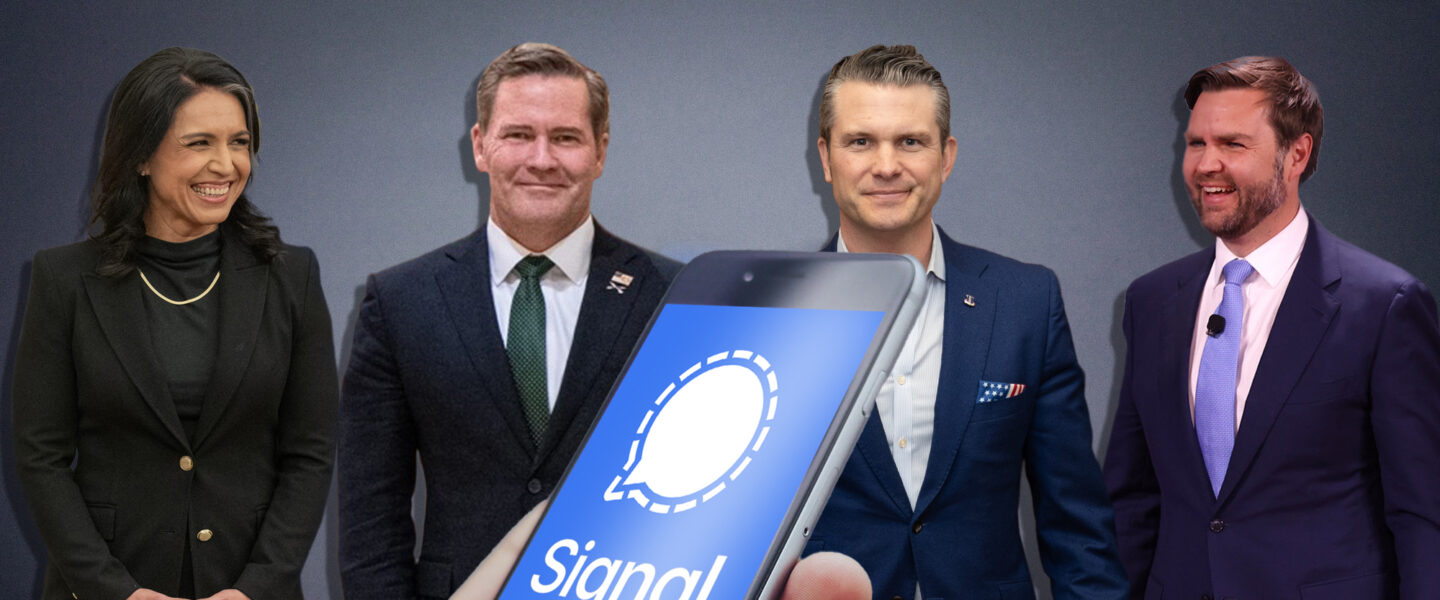
Quoting George Orwell’s 1984, a federal judge ruled on Wednesday that the Trump administration must comply with the Presidential Records Act and preserve text messages, including those sent via the app Signal.
While it may seem unnecessary in ordinary circumstances for a court to remind an administration that it has to follow the law, these are extraordinary times. Seemingly every day, Donald Trump and those working for him act as though the rules do not apply to them, and they often don’t even bother to hide their disdain for laws meant to restrain them.
In this case, the Department of Justice’s (DOJ) Office of Legal Counsel had put together an opinion declaring that the Presidential Records Act, which was passed in the wake of the Watergate scandal to ensure that government officials preserve work-related documents, is unconstitutional. The White House counsel reacted quickly and distributed a memo telling members of Trump’s staff that they did not have to preserve all of the messages related to official business that they sent and received using personal devices and accounts.
In his opinion, US District Judge John Bates, who was appointed by George W. Bush, vehemently disagreed with that interpretation.
“Each branch of government derives its authority from the trust placed in it by the People, and Congress has validly determined that this Act helps to maintain that trust by shining some light on the activities of the President and his aides,” he wrote in his opinion granting a preliminary injunction in the case brought by the American Historical Association and government watchdog groups.
While White House officials and other supporters of Donald Trump claim that this is the “most transparent administration in history,” the facts tell a different story.
Whether it’s the constant attacks on journalists, DOJ’s refusal to comply with a law mandating the disclosure of the Epstein files, the Pentagon’s efforts to keep non-compliant news outlets out of the building, or this memo, the administration keeps acting as though it has something to hide.
Then again, the president’s national security team did add a journalist to a Signal chat discussing an upcoming attack on Yemen.
As for Trump himself, he has a fraught history with presidential records. From tearing up documents in the White House that others had to put back together to hoarding classified files at Mar-a-Lago after he lost the 2020 election to Joe Biden, the president would rather handle “transparency” entirely on his own terms.
In this case, at least for now, he won’t… if White House officials bother to comply with the ruling.
For the plaintiffs, this was cause for celebration.
“Today’s order is a significant win for transparency and accountability,” said Donald Sherman, the president of Citizens for Responsibility and Ethics in Washington. “President Trump and his administration have acted illegally as though presidential records are theirs to destroy or hoard at will. The law is clear: Those records, including work texts and messages on personal phones, are the property of the United States and the American people.”
While that sounds reasonable (and nice), something Bates stated in his decision actually demonstrates why Trump and others in his administration may not want to comply with the law.
“Access to those records allows future Presidents to pick up where their predecessors left off, Congress to identify inefficiency and misfeasance, and the public to learn from the mistakes of the past,” he wrote.
That’s the crucial point and an explanation why the administration is more opaque than transparent. The last thing Trump wants is for Congress (especially one that could be controlled by Democrats next year) to “identify inefficiency and misfeasance” or for the public to identify his mistakes.
Therefore, we are not holding our breath that, in spite of this order, White House officials will follow the law and preserve all relevant documents.