Understanding Iran’s power structure, nuclear future, missile red lines, the negotiations, and what both sides are getting dangerously wrong about each other.
Wars don’t end when the missiles stop flying. They enter a different and sometimes more treacherous phase — one driven not by weapons but by assumptions: that we know who we’re dealing with, what they want, what they fear, and what they’ll trade.
Jim Lamson spent 23 years as a CIA analyst focused almost entirely on Iran — not as a generalist, but as someone who tracked its weapons, its missiles, its military doctrine, and the way the regime thinks about deterrence and survival from the inside out. He is not a commentator offering opinions about Iran. He is a primary source — someone who was in the room for two decades, when the United States was trying to figure out what Iran actually intended.
What he brings to this conversation is something increasingly rare: the ability to hold two apparently contradictory things in his head simultaneously and understand that both can be true. Iran can want a deal and be using every day of negotiations to rebuild its military capacity.
The diplomats can be genuine while the generals run a completely different clock. That’s not a contradiction — that’s how Iran has always operated. And until Washington understands that, it isn’t negotiating with Iran; it’s negotiating with its own assumptions about Iran.
Lamson walks us through what the bombardment actually destroyed and what it didn’t, who is really making decisions in Tehran now that Ayatollah Ali Khamenei is dead, why long range ballistic missiles are the one true red line in any negotiation, how Iran’s nuclear posture has shifted since Hamas’s attack on Israel on October 7, 2023, and what both sides are getting dangerously wrong about each other at the worst possible moment.
 Apple Podcasts
 Google Podcasts
 RSS
RSS
Full Text Transcript:
lamson draft3
Jeff Schechtman: Welcome to the WhoWhatWhy podcast. I’m your host, Jeff Schechtman. The ceasefire seems to be holding, at least for now. The missiles have stopped flying. Diplomats are in and out of rooms in places like Islamabad. And this right now may be the most dangerous moment of all. Because when the guns go quiet, assumption takes over—the assumption that we know who we’re dealing with, that we understand what they want, what they fear, what they’ll trade, and what they won’t.
Over the past several years, something happened quietly inside the State Department and the National Security Council: the Iran experts, the people who had spent careers learning the language, the doctrine, the history, the way the regime actually thinks, were shown the door, pushed out, replaced by political appointees and ideological confidence. And what filled the vacuum was something more dangerous than arrogance: certainty — the certainty of people who have never had to hold two contradictory things in their head at once and figure out which one was true. That may be the most consequential mistake of this entire confrontation.
Which is why we need the insights of my guest today, Jim Lamson. Jim spent 23 years as an analyst at the CIA, focused almost entirely on Iran: its weapons, its missiles, its military doctrine, and the way the regime thinks about deterrence and survival. More than five years of that time he spent inside the Middle East itself. He is now at the Middlebury Institute’s James Martin Center for Nonproliferation Studies and a visiting research fellow in the Department of War Studies at King’s College London. He is exactly the kind of person whose advice and guidance and wisdom we need at a time like this, and he is asking the questions that matter most right now, starting with this one: Is Iran negotiating in good faith or buying time? Washington seems to be organized around that question, but Lamson would tell you that the question itself is the problem. Both things can be true simultaneously. Iran can want a deal and still be using every day of talks to rebuild military capacity and wait out a president it doesn’t trust. The diplomats can mean what they say while the generals run a completely different clock. That’s not a contradiction. That is simply how Iran has operated for decades. And until you can hold both of those things in your head at the same time, you are not understanding Iran. You are understanding your assumptions about Iran.
And it runs in both directions. Tehran thinks it understands Washington — the midterm pressure, the oil prices, the approval ratings, the theory that you can outlast this administration. They may be right about some of that, but they may also be walking into their own blind spot, mistaking the surface noise of American politics for what Trump will actually do when he feels cornered.
That kind of thinking — the ability to hold the contradiction, to understand an adversary on its own terms rather than ours — that used to be the baseline requirement for anyone in the room. It is increasingly rare, and it is exactly what this moment demands and what my guest, Jim Lamson, understands. It is my pleasure to welcome Jim Lamson here to the WhoWhatWhy podcast. Jim, thanks so much for joining us.
Jim Lamson: Thanks so much for inviting me. I look forward to it.
Jeff: Well, it’s a delight to have you here. First of all, I want to talk about this idea of understanding your adversary, your opponent, understanding something on their own terms. Talk about that.
Jim: Sure. As I was an analyst at CIA for 23 years, this was a big part of our daily job and our training and our constant improvement, was trying to understand — as best we could — the adversary and how the adversary thinks, what its intentions are, what its capabilities are, what its strengths and weaknesses are, its vulnerabilities. And that was a big part of what I tried to do as an analyst and what all my colleagues in CIA and across the intelligence community tried to do. It’s very difficult, and you’re often caught between the dual dangers of either underestimating your adversary, or overestimating your adversary. And both of those can be dangerous things. And we’re all victim or guilty of at different times, either underestimating or overestimating our adversaries. But we do try — as I did back then and as I do now — the same philosophy is just trying to find the best I can, the objective reality of Iran, what its intentions are and what its capabilities are. But it’s a tough, a very tough thing to do.
Jeff: One of the things that goes along with that is something that you talk about, this idea of strategic empathy. What does that mean?
Jim: Simply put, it is basically trying to empathize with your adversary. And I should say right up front, this does not mean to sympathize and this does not mean to agree with, but just in terms of empathy, understanding, trying your best to understand what some people call the strategic culture of your adversary, how their historical experience, how their threat perceptions, how their opportunity perceptions I should say as well, how it views the world, how it views itself, and importantly, how it views its adversaries. And trying to understand that without judgment, without moralizing, but just trying to, with the goal of better understanding your adversary for whatever your approach is, if your approach is conflictual with your adversary, to deter or threaten your adversary or to defeat your adversary. It’s really important to know those things. And also, if you’re trying to find areas of compromise with your adversary, it’s still as important to try to have that understanding of your adversary’s strategic culture in order to do that. And in my view, absolutely important, especially these days with Iran — and other countries like Russia, China, and North Korea — to try to understand where they’re coming from, even if you don’t agree with them wholeheartedly. And I am anything but a fan of the Islamic Republic regime, but it’s really important to understand where they’re coming from if you want to either deter them or to come to some kind of a negotiated agreement with them.
Jeff: By and large, does Washington generally fail at that?
Jim: I think it depends on what part of Washington you’re focusing on. I think in the intelligence community, there are still — when I was there especially, and I think still, from what I can understand — it remains the case that there are tons of experts on Iran across the intelligence community, not just in CIA, but in the State Department’s intelligence branch, the DIA, the armed forces’ intelligence bodies, the NSA, and others. It still has lots and lots of experts on Iran, from their politics, their foreign policy, their military strategy, their weapons programs, their capabilities and vulnerabilities, etc.
So I have confidence that the intelligence community retains that really critical expertise on Iran. Now, as you raised in your introduction, do the policymakers, one, do they listen to that or do they take advantage of that as much as they can? And do they also still retain Iran experts in the National Security Council, White House, State Department, Defense Department? If they don’t, or if that expertise has gone down, that is very concerning to me, because they may not be willing to listen to the intelligence community or just be able to confidently and competently take advantage of that experience and insight.
So to me, it’s both good news in terms of the “I see,” “I think,” still has lots of Iran expertise, including lots of people with Persian language skills, of course, which is important in addition to the other areas of expertise. But yeah, I am a little concerned, as you raised, that maybe the level of Iran expertise in the policymaking community may not be what it was in the past.
Jeff: One of the things that seems to be required in order to understand your opponent, understand the adversary, is certainly the cultural framework, the political framework, but also understanding who’s in the room and how decisions get made by the Iranians, what that power map looks like, given that that’s a situation that is constantly changing, certainly in flux right now. Talk about how we try and understand that, and how that plays into this process we’ve been talking about.
Jim: Yeah, it’s a great question. The Iranian strategic decision-making has always been a difficult puzzle for any Iran watcher, analyst, policymaker, academic, etc. So this is nothing new. Trying to deeply understand who makes the decisions in Iran, who is important to those decisions, how those decisions are made, and all the different organizational and political players and factions that are driving, shaping, and constraining that decision-making process and the actual decisions has always remained a really tough puzzle to crack.
And I think that it’s even more uncertain and ambiguous right now with, as the listeners know, the Supreme Leader Khamenei being killed recently, and his son taking over as the Supreme Leader and the uncertainty of what his status is just physically and mentally. But also just uncertainty about what role, even if he is able to take part in deliberations and decision-making, what is that role? And who are the other people around him, his advisors or other officials around the government and the military and what their roles are and their influence and their power in shaping the deliberations and decision-making. This is as tough a puzzle as it’s ever been.
Jeff: What do we know about who’s in the room now?
Jim: At least what I can tell from the, you know, sometimes mixed and sometimes conflictual reporting out there. I mean, if he is physically and mentally able to, Mojtaba Khamenei, the new Supreme Leader, is almost certainly part of the decision-making process. Now, whether that is like his father, who was involved in at least for really important strategic decisions — sometimes he’d be involved in every phase of deliberations and decision-making on the issues, from the initial making the agenda, prioritizing the deliberations, and of course the final decision and approving the final decision. His father was very much involved in all of that, especially on high-level strategic military issues.
Now, it might be that the Supreme Leader now is only involved in approving of decisions that were made when he wasn’t there. But he does have representatives — the Supreme Leader has representatives in all of the major decision-making bodies. So at least indirectly, he should be well aware of the deliberations. But exactly how much he’s intervening at any point is really unclear to me.
Now, other people in the room, if you will, or other people involved in shaping, driving the deliberations and decisions are people like, of course, the hardliners, especially the IRGC. And when I say IRGC, that includes both current officials of the IRGC, and it also includes important officials that are IRGC members but are no longer officially part of the IRGC, but they have other governmental positions. So, for example, the IRGC commander Vahidi is, from all accounts, is a very influential person right now, especially in the current situation with all the military and weapons issues and strategy issues going on. Other folks in the room will be the Speaker of the Majles, the Iranian parliament, Ghalibaf, who is a former IRGC official and apparently is one of the people shaping things in the decision-making process. The Secretary of the Supreme Council for National Security, which is basically Iran’s version of our National Security Council — but with even broader mandate and membership—the secretary of that body is Zolghadr, and he is also IRGC and a hardliner. And also the Supreme Council for National Security has a relatively new National Defense Council, which focuses on military and weapons issues, and the secretary of that, his name is Ahmadian. He is a longtime IRGC official as well. So these are the folks that, from my understanding, at least in the most important issues related to military strategy, negotiations with the US, and weapons issues — especially building and rebuilding their weapons capabilities — these are the key folks, at least some of the main folks that I have seen that are involved in the process. So as you can see, mostly hardliners and IRGC folks, this is a difficult situation for us.
Jeff: Does the IRGC speak with a single voice at this point, or are there conflicting views even within the IRGC?
Jim: Yeah, the IRGC has always been a non-unitary, not a monolithic actor. You’ll have views within the IRGC across the spectrum, different factions, apparently over time. And that probably still remains the case. So yeah, looking at the IRGC as a monolithic entity can be a little dangerous or at least misleading. But exactly where those fault lines are and who’s part of what kinds of camps is just not something that we are able to look into, that black box. But yeah, I think it’s a good point to make that you should not necessarily look at the IRGC as a monolithic actor.
Jeff: How much more difficult does it make trying to ascertain, coming back to where we started this conversation, to ascertain the motives and the actions of your opponent when there is such a wide range of opinions that go into their decision-making process and that it is, as you say, a kind of black box that we don’t fully understand?
Jim: Yeah, it’s absolutely tough. It’s much easier, and still not easy, I should say. It’s still very difficult, but it is much easier to assess their capabilities and their vulnerabilities in terms of military, especially military capabilities, economic, industrial capabilities, technological capabilities. But understanding their intentions, both immediate short term and long term, has always been a very, very tough thing to do.
The best you can do in a lot of cases is do your best to triangulate, if you will, between what the Iranians are saying and what they’re doing and the perceptions and especially credible information from other actors, whether that’s from the US, from other countries in the region, international bodies, whatever, you’re trying to do your best to triangulate among all those different sources: what is Iran, what are their plans and intentions? Where are they trying to do? And it’s very qualitative, of course, and very uncertain, especially in times of crisis and times of war.
And there’s a lot of commentators out there who will say you should not listen at all to anything Iranian officials say, which I don’t agree with. I know there, you know, there always is a lot of propaganda by the Iranians. They will exaggerate their capabilities. They will convey mixed messages, all that kind of thing. But having been an Iran watcher for over a couple decades now, there’s typically always at least a grain of truth in what they’re saying, whether it’s about how they plan to fight, what their weapons capabilities are, what their priorities are, what their redlines are for negotiations, things like that. There’s always at least a grain of truth in a lot of what they say. So I am not of the opinion that you completely ignore what the Iranians say and just only look at what they do. I think you have to look at both and then look at both of those things in the context of all the other inputs of information you’re getting. But yeah, assessing Iranian plans and intentions, immediate, short term, and long term, is an extremely difficult thing, and it will remain so.
Jeff: And sometimes those intentions, as you pointed out, are conflicting in and of themselves, that it does require this ability to look at two different ideas simultaneously. And both of them may be true with respect to their intentions.
Jim: Absolutely. Yeah. And then some of that reflects, as we, you know, as we already talked about, there might be differing opinions and views and priorities by all the different officials and [within] the governing bodies and organisations within Iran. And that might be one reason for sometimes getting conflicting messages. And sometimes a policy or a position may still be developing. I mean, we see that in US and other countries as well. Sometimes you’ll see indications of positions or policies that are in the making and haven’t been decided on yet. So that can create sometimes mixed signals if they’re still working out what their negotiating position is or what their exact military strategy and doctrine is in a given time. Yeah, it’s absolutely tough.
Jeff: When we look at what was done in terms of military damage to Iran, what do we actually know? How much damage did the airstrikes do at this point?
Jim: Yeah, that’s something I’ve been looking at pretty intensively over the last year, especially since the twelve-day war and then this recent war. I look at a lot of satellite imagery and compare it with other information to try to get a picture of what has been damaged so far.
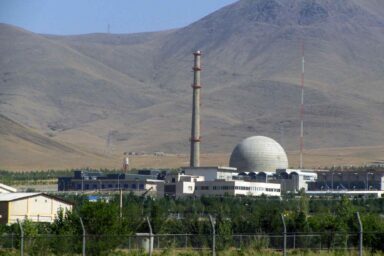
And I think one point I would make, I mean, you can look at the recent war as its own case in terms of what was damaged. But I think it’s a lot more useful, especially looking forward and the strategic implications of it, to look at the cumulative effects of Israeli and US attacks actually since 2024 — but especially last year and recently — looking at the cumulative effect. So in terms of that, in a nutshell, the US and Israel were able to impose severe damage on several key elements of Iran’s nuclear and military capabilities. Among other things, this includes, on the nuclear front, severe damage to Iran’s what we call fuel cycle facilities. That is, the facilities that are involved in the most kind of concerning element of the nuclear program, the uranium enrichment, and everything before that in terms of facilities involved in that whole process. Those fuel cycle facilities were severely damaged across several sites, especially in 2025, but also in 2026.
But in the area of nuclear, there’s also this element of the weaponization facilities. That is, when the US and the West state their concerns about Iran’s nuclear program, it’s not just that fuel cycle. A lot of the focus typically is on the uranium enrichment aspect, which is of course really important, but that is the fuel cycle. There’s also the separate element of the weaponization facilities that Iran has developed over time. These are facilities that are suspected of being involved in actually having the capabilities and the technology development to produce a nuclear weapon, the actual device, if Iran made the decision to do so. So this includes facilities like explosives, neutronics, metallurgy, things of that nature. And over about a dozen of those facilities were hit in 2025 and 2026. So in the nuclear area, both the fuel cycle and weaponization areas have been severely damaged.
In addition to that, of course, a key focus of US and Israeli attacks were against Iran’s missile and drone capabilities. So ballistic missiles, cruise missiles, and drones were a key focus. And this includes three elements in that category. One are the deployed forces and bases related to missiles and drones. But in addition, and really importantly, they went after — really systematically went after — Iranian production facilities for missiles and drones and also the domestic supply chains, those domestic Iranian industries and companies that supply key inputs into those production facilities. All of those, dozens of those facilities across the country, were damaged or destroyed.
And then they went after Iran’s defense industrial base more broadly. Of course, they went after Iran’s air defenses, things like surface-to-air missiles and radars. They went after Iran’s air and naval forces. They even went after Iran’s space program. Iran has had a longstanding program to develop satellites and then develop launchers to put them into orbit. The US and Israel attacked key aspects of that space program.
And then in addition to all those things, of course, they killed dozens of political military leaders. They imposed some severe damage on Iran’s internal security apparatus. So yeah, there was a lot of damage to all those elements that I mentioned, in 2025 and especially in the recent war.
But having said that, translating these operational effects into strategic success for the US and Israel, in my view, remains kind of to be determined. It’s easier to look at damage and death on the one hand, but to assess what actual strategic impact those operational effects had, to me, it’s to be determined.
Jeff: Why don’t we know that? Why is it so hard to determine that?
Jim: Well, in my view, I think the US and Israel were kind of unclear — from the justification for the war, during the war, and even now — what those strategic goals were. I think there is some divergence between what the US and Israel said about what their strategic goals were. So things like, was regime change part of the US strategic goal? There were some signals that it was, later signals that it wasn’t. And what do we mean by regime change? Is it changing the makeup of the leadership that’s in power, which that did happen, does it change regime behavior, or is it a complete change in the system of governance? So there’s an uncertainty there. I mean, there was also, the US talked about wanting as a strategic goal the unconditional surrender of Iran, which is something that clearly didn’t happen. There was this idea of removing an imminent threat from Iran. And perhaps that was accomplished to a certain extent or not, because it’s unclear exactly what they meant by imminent threat.
Another strategic goal that was stated at certain points was to destroy Iran’s ability to project power. I think that has been severely damaged, but whether that has been destroyed, at least I don’t think so at this point. Also the goal of not allowing Iran to have a nuclear weapon. As I mentioned, Iran’s key nuclear facilities related to fuel cycle and weaponization were severely damaged. Did that achieve the goal of Iran never having a nuclear weapon? I think that remains to be seen.
So yeah, and it’s still to be determined what Iran agrees to, if anything, with the ongoing negotiations. Will it agree to certain nuclear limits? Will it agree to issues related to the Strait of Hormuz, etc.? So I think, to me at least, US and Israel clearly prevailed militarily and at the operational level of this conflict. But to me, it remains uncertain and doubtful whether the clear strategic, diplomatic, military, political, and economic costs to Israel, the US, and even Gulf states have yet been outweighed by the strategic benefits. To me, it still remains to be seen.
Jeff: In terms of those negotiations going forward, there are a few things that you’ve talked about with respect to what are red lines for the Iranians, particularly with respect to their ballistic missiles. Talk about that.
Jim: As you and the listeners well know, Iran has engaged in various negotiations — formal, informal, small scale, large scale — with the West for decades. This has sometimes achieved certain agreements, sometimes didn’t, but during these negotiations, or during these last couple of decades, Iranian officials have laid out what they call certain red lines for things they won’t agree to, they won’t agree to commit to, or even sometimes agree to talk about at all. And ballistic missiles have been one of those areas that they have consistently said over the past at least decade, if not more, that discussing limits on their ballistic missiles, whether those are the size of their arsenal, whether those are limits to the ranges of their ballistic missiles, or other kinds of limitations, that is something that they have consistently said is a red line that they will not agree to even talk about.
Other areas that they’ve called red lines are just in general, they’ve said their defense capabilities, their ability to defend themselves with conventional weapons is another area. And the defense industries that support those is another area that they have consistently said is a red line. So yeah, the ballistic missile issue, and I think you can now lump in drones with that as well, is something that the Iranians will, I mean anything’s possible, but I think that is one of the last things that Iran will agree to negotiate limits to.
Jeff: To what extent are they already engaged in rebuilding and how is that impacting their behavior with respect to negotiating and stalling negotiations?
Jim: From what I can see, they are attempting to, I should say, their first priority is to maintain the capability, the readiness of their operational missiles and drones should there be a resumption of a conflict. So that, to me, is kind of one of the highest priorities for Iran right now, with all the damage done to deployment, their forces, to their bases, to destruction of launchers, they are doing their best to maintain and to enhance their readiness and their capabilities with their operational missiles and drones to be able to, if there’s a next phase of the war, to be able to fight it. So that means digging out some of the tunnels that were buried from bombs and being able to access those tunnels and access all of the missiles and launchers and drones that are in those tunnels.
I do also think that even though their production capacity, their production facilities, have been severely damaged. I think there’s reason to believe that the Iranians, before the war, had stockpiled lots of finished components for missiles and drones inside of their missile cities, inside their tunnels, to be able to assemble new missiles and drones from those parts to help replenish their arsenal. I have no idea how many that is, if they have those — so whether it’s being able to replenish dozens or hundreds of drones and missiles — but I think that they are probably working on that as well. So it’s both to repair and maintain their current arsenal and to have it as ready as possible for war, and also to do what they can to replenish at least some of those missiles and drones using some of those stockpiles of parts that are in their tunnels now.
Now rebuilding their other aspects, their production facilities, domestic supply chains, I would assume that they are, if not already, trying to do that. But that poses very serious challenges for them. Some of these facilities use very specialized equipment that they may not be able to get from domestic suppliers. They may have to go to countries like Russia and China, or rely on illicit foreign procurement, to repair and rebuild some of those facilities.
And they may not be interested in rebuilding some of the facilities that were destroyed because they are very vulnerable to more attack. So the Iranians may be thinking about making new facilities or moving facilities underground or to other parts of the country, something that would take a lot of time. So yeah, I think the biggest priority for Iran right now is to just get its forces ready, especially its missile and drone forces ready, for a resumption of conflict. But in addition to that, some of that longer-term rebuilding, they’re going to have to try to do over the next weeks, months, years.
Jeff: You mentioned Russia. What is the relationship right now between Iran and Russia?
Jim: Yeah. Russia and Iran have a longstanding military and defense relationship that goes back decades. More recently, they’ve cooperated mostly one way — from Russia to Iran — over the decades, with Russia providing various weapons and equipment to Iran and more recently cooperating on things like joint military exercises.
The two countries last year signed a strategic partnership agreement. So they’re not military — I think sometimes there’s a misperception out there that Iran and Russia are military allies. They are not. They are strategic partners. But for example, Iran and Russia do not have mutual defense commitments to each other. They’re not committed to defend the other if the other is attacked. It’s not like a NATO-type relationship. But they do have an important strategic relationship where they have laid out areas of political, economic, military, and industrial cooperation that they are implementing over time. An important part of that is the military and defense cooperation. And we saw a big uptick on that with the Russian war in Ukraine, where Iran, instead of being mostly the recipient of Russian cooperation and assistance, in that case Iran was the supplier of drones and drone production technology, among other types of military equipment, to Russia to support Russia’s war.
But since Russia has, over the past couple of years, become self-sufficient in drone production based on what Iran provided it, it’s less and less dependent on Iranian assistance. So I think the relationship has moved back to more of a one-way relationship from Russia to Iran. And as you may have seen in reports during 2025 and especially this last war, there are lots of reports of Russia providing intelligence support, satellite imagery support to Iran, expertise on drone tactics to Iran, and even may have supplied some actual drones to Iran.
So they are strategic partners. They have military cooperation, but they are not military allies, if that makes sense.
Jeff: Talk a little bit about the state of Iran’s nuclear capability at this point, what their intentions are, how they see the role of nuclear in terms of their own defense. And one of the other points that you’ve talked about is the way the whole discourse about Iran’s nuclear capability inside Iran has changed since October seventh.
Jim: That’s a great question. Yeah, I think there’s a very high level of uncertainty right now in terms of the current status of their nuclear capabilities, with all the damage that’s been done really since 2024, mostly by the Israelis, but also by the US against, as I had mentioned before, the fuel cycle facilities, the weaponization facilities, and even some Iranian companies that provide key technologies to these programs, which were all struck or hit. And this is in addition to years of Israeli operations to assassinate scientists and officials, to conduct sabotage. So Iran’s nuclear program has taken a beating, if you will, especially in the last month, but in the years prior.
So where does it stand now is hard to say. I mean, they still reportedly have 400 kilograms of highly enriched uranium, which is of course the main concern of the West right now. What is the status of that? What’s going to happen with it? Will Iran agree to get rid of it? So that is a key uncertainty right now. It appears to be still stored in tunnels in Esfahan, but it is unclear what’s going to happen with it. Maybe Iran has already moved it. It’s just unclear. So there’s a lot of uncertainty of where they stand. And especially whether they would be able to actually produce a nuclear weapon if they decided to do so right now. Could they? A key question that people are grappling with is, could Iran take that 400 kilograms of highly enriched uranium and, with the existing facilities it may have, either the ones that were damaged or facilities we don’t know about that might be underground for example, could they actually take that and produce, you know, one, two, or a handful of nuclear weapons over the next several months? Unfortunately, I don’t have a good answer to that, but that is something that people are grappling with right now.
So in terms of their intentions, yeah, there’s been a lot of, again, a high level of uncertainty about this, whether the damage and impact of the war will actually push Iran to say, “You know what? Our deterrence failed to prevent these attacks, both in 2025 and 2026. Our ballistic missiles and our other capabilities didn’t deter this. Our axis of resistance partners, Hezbollah, the Houthis, Iraqi militants, didn’t deter this. So we need something else.” Apparently, there are voices in the Iranian regime that have that view, that they really need nuclear weapons now. Look at North Korea. Look at other cases that have been able to deter attack. But it’s unclear to me whether those are views that they’re fighting about internally or whether they’re actually going to make a decision to try to produce. Because there are, in addition to the technical challenges that I briefly mentioned, there’s of course the risk that this would not just result in renewed massive strikes against Iran, but could involve more drastic military measures against Iran. So there is a big risk as well if Iran were to try to weaponize.
And yes, since October seventh, as I alluded to, those of us that look at Iran’s deterrence strategy, its deterrence posture – that was a key date that started a whole set of events from late 2023, the Hamas attack on Israel, that led to all kinds of events up until the current day, that really damaged key elements of Iran’s deterrence strategy and deterrence posture.
The initial damage was, of course, to Iran’s axis of resistance partners with Israeli strikes and damage against Hezbollah capabilities. There were US strikes against the Houthis in Yemen, which damaged their capabilities, strikes more recently against Iraqi militants. So while not totally out of it, these axes of resistance partners, their capabilities and their leadership in a lot of cases, with the killing of their leadership, have been severely damaged. They still retain capabilities to attack, to retaliate, but that pillar of Iran’s deterrence strategy, the axis of resistance, has been severely damaged.
And then other pillars since then, the nuclear pillar that it uses for leverage as a way of deterrence, basically, of preventing attack, using it as leverage for negotiations, for the threat of escalation, whatever, that has been damaged. As I mentioned, their ballistic missile capabilities and drone capabilities have been damaged. That was, of course, still is moving forward, a key pillar of their deterrence strategy. And lastly, their asymmetric naval and air capabilities: their air defense, their use of surface-to-air missiles for their air defenses, their naval forces that were destroyed by US and Israeli attacks.
So all the main pillars of Iran’s deterrent strategy have been damaged — not totally put out of operation, but have been damaged. So the Iranians right now are in a really difficult situation of how they are going to deter future, not just immediate, but looking into the months and years ahead, how they are going to effectively deter Israeli and US attacks moving forward, especially with all the damage that’s been done to their facilities. And that’s a key question for the Iranians. And that’s a key question for people like me who are looking to see how Iran is going to respond to that challenge.
Jeff: All of it, of course, begs the question of them developing further their nuclear capability, because that’s a shortcut around all this other stuff.
Jim: It could be, absolutely. In the scenario where Iran is able to take that highly enriched uranium and, assuming they have the sufficient expertise and knowledge of their people and sufficient facilities to convert that highly enriched uranium into metal hemispheres for a weapon and then have the facilities and expertise to put together an actual weapon and to develop a delivery system for it, if in that scenario, which as I mentioned, Iran faces strategic, technical, and other challenges to do that, but assuming for a second that they were able to do that, that would absolutely, that could be a game changer in terms of, you know, if they were able to, for example, do all that without being attacked and disrupted and to perhaps do a demonstration test underground or, for example, the strategic effects of that could be severe, now whether in the region and internationally.
Now, a lot of the effectiveness of that in creating a deterrent for Iran would depend on the response of the Israelis, the US, and the West. Would that trigger an invasion or some other massive ground campaign to find and take out those weapons? Or would it result in a kind of enhanced deterrence for Iran? I just don’t know, because a lot of the, I think one of the things Iran has learned as a lesson in terms of especially its nuclear program, but also its missile program is, and something it’s going to have to be more careful about in the future is how much of these capabilities are sufficient to deter, versus how these capabilities might actually provoke an attack.
And I think in the nuclear area, one of the lessons they might have learned is that they moved too close to the threshold of weaponization, and it actually perhaps provoked an attack and didn’t deter attack. And the ballistic missiles as well, in terms of them producing a very large arsenal, that may have moved beyond having a deterrent effect and actually moved to provoke Israeli and US attacks on it. So that’s something they’re going to have to worry about or deal with in the future is, how do we create deterrence capabilities that are sufficient to deter, but don’t go so far as to provoke actual attacks on Iran, and that’s going to be a key challenge moving forward.
Jeff: Which raises the question of what Iran gets wrong about Washington. What do you think that they understand and misunderstand about the US and how we operate?
Jim: Yeah, it’s a great question. I have more ideas about what the US gets wrong and thinking about what Iran gets wrong. Both sides have had an incredibly hard time discerning each other’s intentions leading up to this, of course, and currently. I think Iran sees the US right now as an irrational and unpredictable actor. And that’s not a comment, it’s not a political comment of the US domestic politics. I think that has happened in the past. I think they have a hard time discerning when — especially when there are mixed signals coming out of Washington, and mixed signals from Washington is not a new thing. That can happen under any administration. But I think currently right now Iran sees the US as a monolithic entity, if you will, as an irrational and unpredictable entity. So they’re having a tough time discerning the signals that are coming from what are the US goals, what are their positions, what are they willing to agree to, what will push them to resume full-on attacks. And that’s driven by not just events over the past couple of years, which have been a big part of it, but there’s a lot of historical baggage and grievances by the Iranians, and by the US as well, and lots of demonization going on by both sides. Which gets to the strategic empathy part, something you try to avoid is demonizing the other side, even if they are your worst adversary. There’s still really no value in, apart from domestic politics, in demonizing the other side. In my view, there’s not a lot of value in that apart from just scoring points.
And then there’s domestic politics shaping each side’s views, Iran’s views and US views as well, and shaping the statements coming out. So I’m not sure about what Iran has gotten wrong, especially right now, but there is a lot that they are just unable to grasp when they’re looking at US policies and actions. And I think that uncertainty is higher than it’s ever been right now.
Jeff: Given all that, is there a deal to be made?
Jim: Yeah. That’s tough. I mean, in theory, I think there’s a possibility that there could be some kind of commitments on the nuclear issue where Iran can, you know, might find a way to agree to at least certain limits, for example, handing over the highly enriched uranium or agreeing to dilute it, putting the rest of the uranium stockpile under IAEA monitoring, maybe some kind of limits on the level of its uranium enrichment moving forward, a promise to not develop nuclear weapons, something that’s already said in the past. But, you know, that could be something that could be a part of it. And in response, the US agreeing to lift at least some sanctions and maybe some kind of assurance of no more attacks. But that is, at the end of the day, just a political commitment. I’m not sure how you would verify or how the US would rein in Israel, for example.
There might be steps to de-escalate as well more immediately, agreeing to open the strait, resume ship traffic since that’s in the clear interest of both sides. But even those, I think, are going to be tough to come up with just because of the environment of mistrust and enmity between the two sides, both historically and especially right now with what’s happened in the last couple of years.
And when you think about an agreement, I mean, you can think about three criteria that are necessary to actually come up with any kind of agreement, and they get harder as you go through them. The first one is, are the commitments or the elements of the agreement being negotiated, would they be effective in actually addressing each side’s concerns? And that’s where you get to what are going to be the things that they’ll agree to, and would they be effective in both alleviating US concerns with Iran’s nuclear intentions and capabilities or other things? Would they be effective to Iran in terms of alleviating economic sanctions or getting other kinds of benefits? So effectiveness is that first criterion.
The second one is verifiability, or monitorability. Are the commitments that each side is providing verifiable or monitorable? Can you verify that they won’t cheat on them? And some of these you can verify a little better, like monitoring uranium stockpiles or monitoring their level of enrichment. But promising not to develop nuclear weapons, can you really? The kinds of intrusive monitoring and inspections you would need to monitor, for example, Iran’s weaponization sites, which have never been under IAEA monitoring, is something that, if you don’t have that monitoring capability, then how can you verify that Iran is not cheating? On the other side, if the US agrees to some kind of assurance of no more attacks, how do you verify that? You can’t. Maybe the fact that the US withdraws its offensive military forces from the region, but that’s not necessarily verifying that it couldn’t still attack Iran. And you still have Israel involved as well.
And then the third criterion, which is the hardest, is, is it politically feasible? So you could come up with all kinds of great ideas for the effectiveness part, all kinds of things that both sides should agree to. You could even come up with some very useful monitoring or verification measures. But if both sides, if it’s not politically feasible with regard to domestic politics or due to mistrust and enmity, then the first two criteria don’t matter at all.
So that’s where I think it’s going to be the hardest. We can come up with ideas of a ten-point agreement or a five-point agreement or a fifteen-point agreement, some things that have been thrown around by both sides. But if you can’t verify them, and especially if they can’t get through the domestic politics challenge, then they’re just lists of proposed commitments.
So that’s a long way of saying I think it’s going to be real hard to come up with any kind of negotiated agreement at this point. But I can see a scenario where there are steps to de-escalate, maybe at least some initial commitments by Iran on its nuclear program and at least some initial commitments by the US to raise some sanctions. But in addition to that, things like the missile issue that we mentioned or Iran’s assistance to its axis of resistance partners, these are going to be much tougher to even just put on the agenda, much less negotiate some kind of agreement.
Jeff: Not to put too fine a point on it, it does seem that the best case in this situation, the potential best cases are steps backwards from the JCPOA.
Jim: Yeah, that’s a big discussion right now in the Iran and the nonproliferation community: fighting about the good, the bad, and the ugly about the JCPOA. And how much of the things that have been proposed so far are just things that we already had in the JCPOA or things that would be additions but aren’t really meaningful and more like symbolic. So yeah, unfortunately, we have to deal with the fact that the JCPOA is gone and it’s not coming back. Whether you are, you know, if you are a fan of it, then that’s bad news. If you were an opponent of it, then that’s good news. But moving forward, are we just going to get, I mean, the JCPOA is hundreds of pages of commitments and technical issues and all that. Are we just going to get a one-page agreement that is a watered-down JCPOA with some other political commitments? Yeah, it’s a real possibility.
I think there’s also a real possibility that we’re going to continue with this kind of ‘no war, no peace,’ as some people say, scenario moving forward, where there’s no negotiated agreement at all. There’s just kind of a tacit agreement to halt the conflict for now. So, for example, the US claiming victory and withdrawing, but continuing diplomatic and economic pressure, plus the threat to resume military operations. Iran opens the strait. We might see continuation of kind of low-level tit-for-tat actions on each side moving forward, kind of like we saw in the past decade. But that would be a very highly unstable, unpredictable situation with no resolution on some of those key issues, including those that the US and Israel use to justify the war, and things could quickly escalate. But I think even with a negotiated agreement, things are going to be able to quickly escalate in that case as well, especially with Israel involved and not necessarily a proponent of a negotiated agreement. If there’s an agreement of something limited that I just mentioned, that’s probably not going to be seen very positively by Israel. And Israel might have incentives in the future, as they see Iran try to rebuild, to come back at least with limited strikes to, as they say, ‘mow the lawn,’ but also continue their campaign of assassinations and sabotage. So there’s just a lot of, I really do see this no war, no peace, perhaps with a limited agreement or even without a limited agreement, as something that’s where we’re going to be at least in the coming months, if not years.
Jeff: With respect to some kind of an agreement, the Iranians seem to want more than just an agreement. They seem to want some kind of treaty, if there is to be any kind of settlement. Talk about that.
Jim: Yeah, that’s a good question. I’ve just seen very mixed signals about what the Iranians exactly want. So I’ve seen, and this goes back to proposals from the Iranians 20 years ago, 20-plus years ago, where they did seek a kind of a grand bargain with the US during the 2002, 2003 timeframe. Where they did reportedly propose a whole menu of agreements with the US that would — it wasn’t called a peace agreement or a peace treaty — but it would address a lot of the big concerns on both sides. And we haven’t seen anything close to a proposed grand bargain since then. I don’t think that’s, that’s definitely not in the cards. But something more than just the nuclear issue and sanctions is, I think Iran does want guarantees or assurances, whatever they look like, that the US and Israel won’t attack Iran again, maybe other aspects of economic cooperation, in addition to lifting sanctions, seeking, like under the JCPOA, assistance to their civilian economy or things like that. But it’s hard for me to see exactly what the Iranians would or wouldn’t want as part of a wider agreement at this point. But I think something like a grand bargain is definitely not on the cards. But something beyond just the nuclear issue, maybe if there’s a step-by-step process going on where you have a limited agreement at first — and this is just theoretical at this point with all the challenges that we discussed — but theoretically, some kind of limited agreement now to de-escalate and make some limited commitments, and then build on that, try to create at least some level of, trust is not possible, but maybe confidence is a better way to put it.
If both sides adhere to or comply with what they committed to under this initial limited agreement and months go by, it might even be years, but several months go by and there’s some confidence that at least the two sides have kept with their commitments in this, then maybe they can expand on that and come up with some more, not significant, but more steps toward reducing risk, confidence-building measures, things of that nature moving forward. But yeah, the likelihood of that right now, to me, is really tough. But you never know. Anything’s possible.
Jeff: I mean, the irony of it is that that was the whole foundation of the JCPOA, that it was this two-year trust-building exercise.
Jim: Yeah, that was a big part of it, was kind of seen as what people call a confidence-building measure, a CBM is an acronym thrown around. So yeah, it had very specific commitments on the nuclear issue. It had very specific commitments on sanctions. It even included commitments to cooperate with Iran on peaceful nuclear cooperation. So it had those things. It had an element of verification and monitoring to it for the nuclear side of things. And it was, as you said, seen by many as a first step in building more confidence in both sides moving forward in the months and years after it. If both sides, moving forward years or months after it, kept to their commitments, that would possibly increase the confidence by each side, not trust necessarily, but confidence that the other side would keep to their commitments to a certain extent. And yeah, with the JCPOA gone, we took a step back in terms of trying to build any semblance of confidence between the two sides.
Jeff: Jim Lamson, I thank you so very much for spending time with us today.
Jim: Thank you so much. This is a great discussion, and thank you for inviting me.
Jeff Schechtman: Thank you. And thank you for listening and joining us here on the WhoWhatWhy podcast. I hope you join us next week for another WhoWhatWhy podcast. I’m Jeff Schechtman. If you like this podcast, please feel free to share and help others find it by rating and reviewing it on iTunes. You can also support this podcast and all the work we do by going to WhoWhatWhy.org/donate.